Case Study
Source.Plus
Platform for curating and licensing AI training datasets with a search-first user experience.
- React
- Next.js
- TypeScript
- Redux Toolkit
- Elasticsearch
- Amazon Cognito
- Jest
- Testing Library
- Mixpanel
- Sentry
Visual Preview
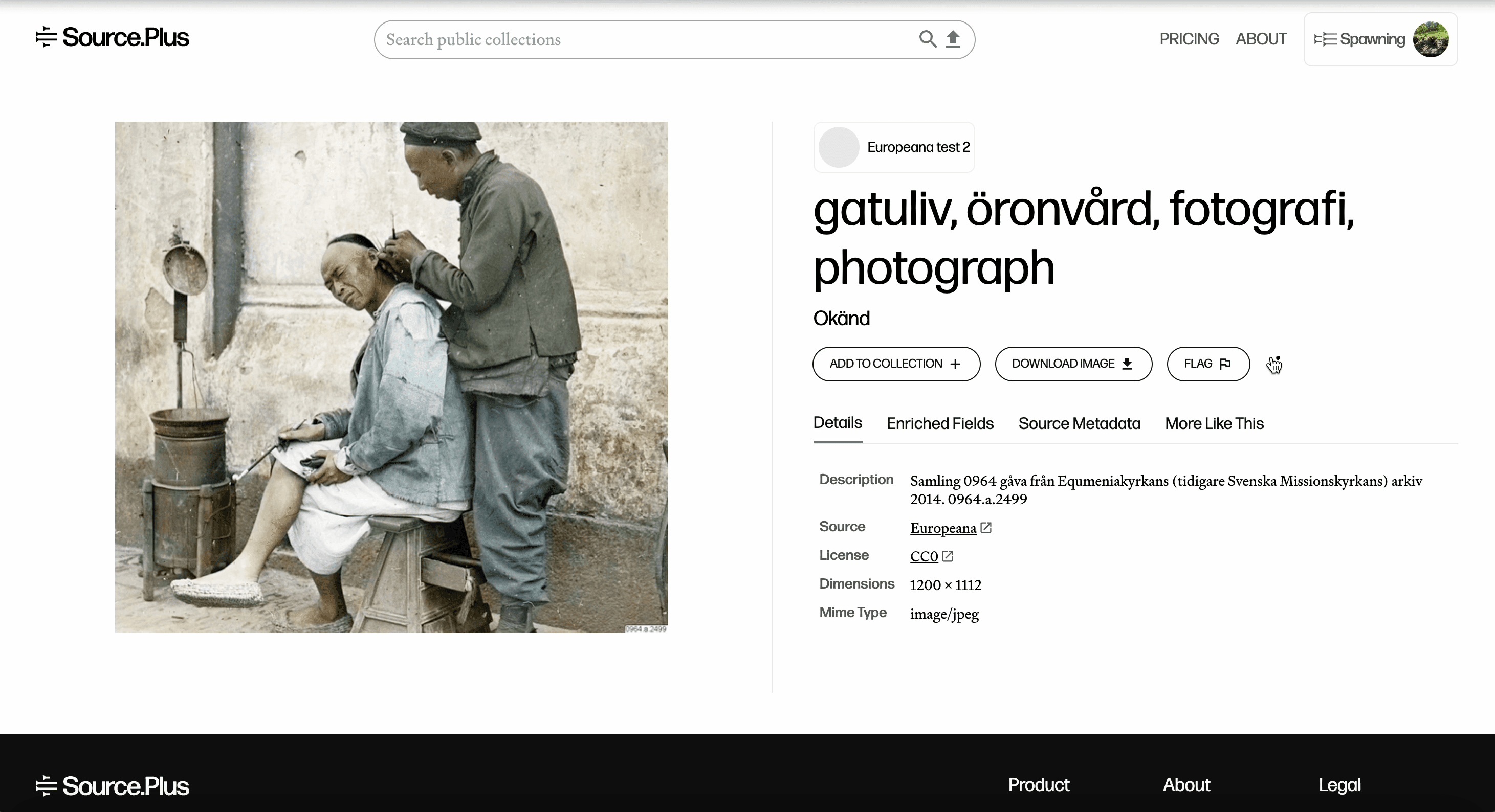
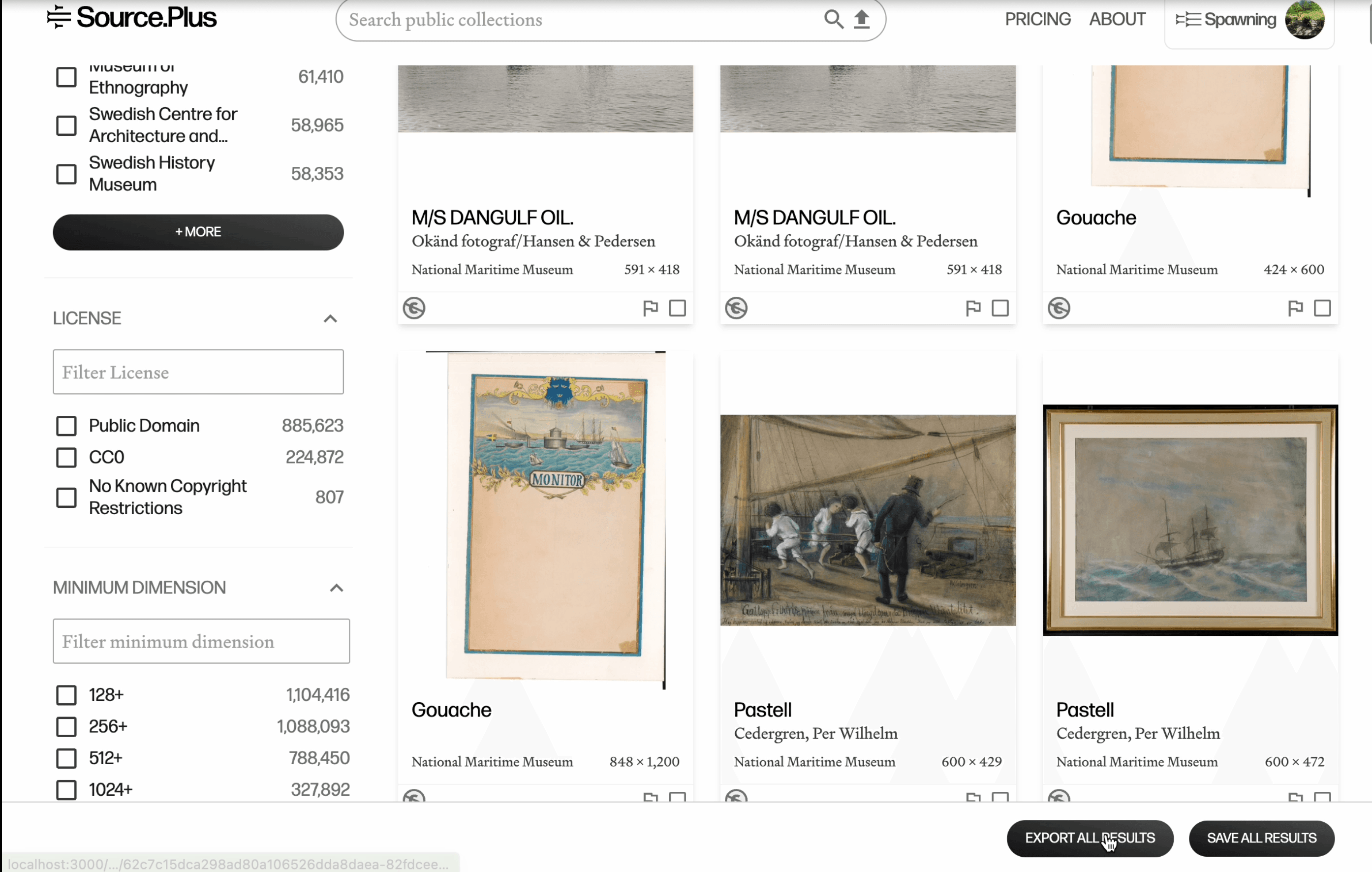
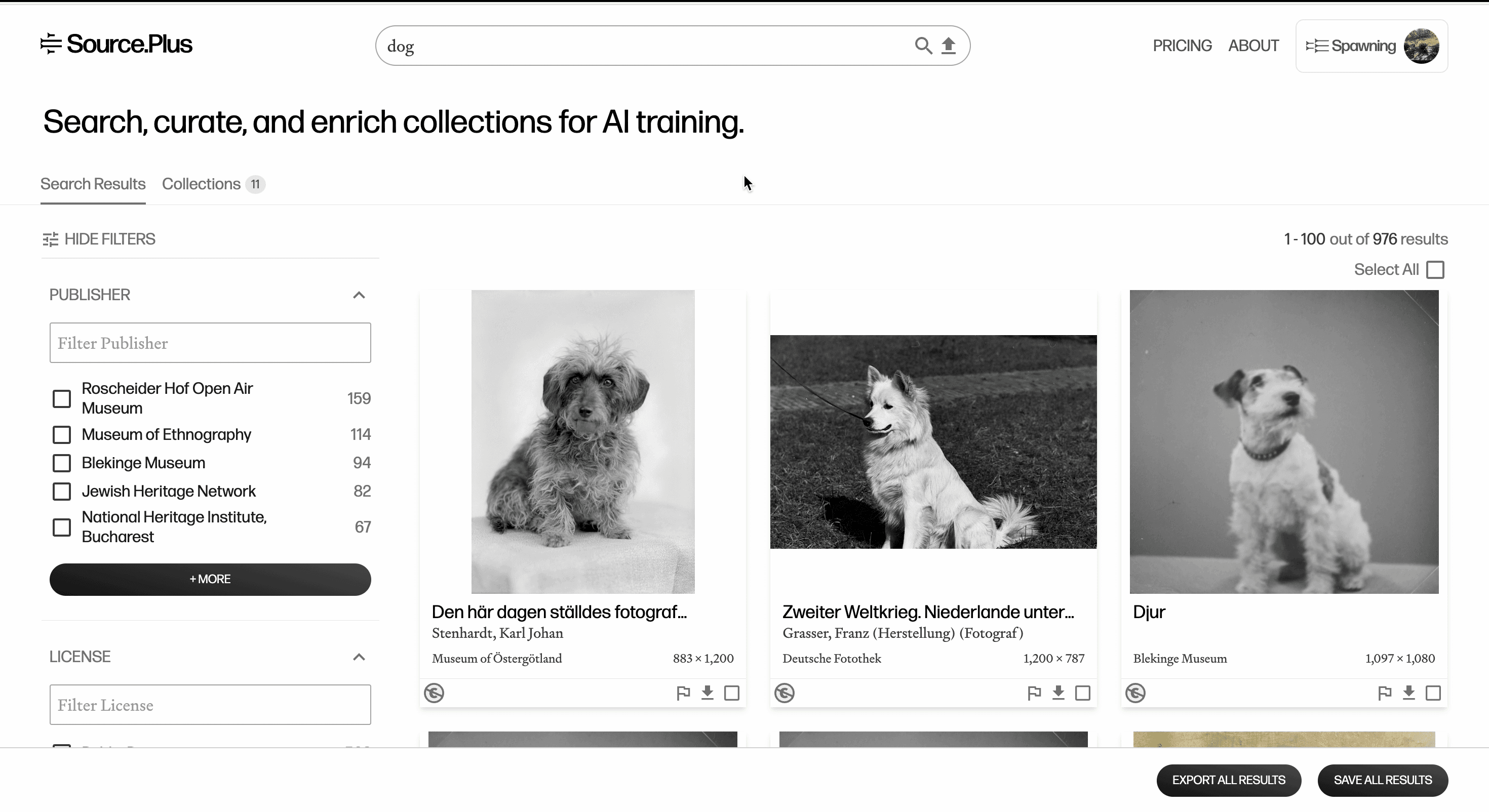
Overview
Source.Plus is a platform for teams curating and licensing AI training datasets. It is built for users who need strong discoverability, clear workflows, and predictable performance across data-heavy interfaces. The product solves a practical problem: making dataset discovery and curation usable at scale without sacrificing speed or UI clarity.
My Role & Contributions
- Built the frontend from the ground up as the sole frontend engineer.
- Designed a modular component architecture that balanced MUI with custom design-system components.
- Implemented critical user flows including search, authentication, and form-heavy workflows.
- Integrated Elasticsearch UI, auth/session management, analytics, and monitoring.
- Collaborated closely with backend and product to shape performant, shippable UX.
Tech Stack
- React
- Next.js
- TypeScript
- Redux Toolkit
- Elasticsearch
- Amazon Cognito
- Jest
- Testing Library
- Mixpanel
- Sentry
Key Features
Dataset Search & Filtering
Fast, faceted search experience backed by ElasticSearch with query behavior tuned for discoverability and precision.
Authentication & Session Flows
Secure login/session flows via Amazon Cognito, including clear user feedback for auth edge cases.
Curation Workflow UI
Structured, form-driven interfaces for building and managing curated AI training datasets.
Observability & Product Insights
Sentry for operational visibility and Mixpanel events for product decision-making.
Architecture / Technical Details
Rendering strategy
Mixed SSR, SSG, and client-side interactions in Next.js for fast initial load while preserving rich interactive behavior.
State & data flow
Redux Toolkit + Redux Persist for predictable global state and persisted session-sensitive UI state.
Search integration
ElasticSearch integration through Search UI tooling and query builders to support advanced filtering and relevance.
Performance & reliability
Feature-level monitoring with Sentry, behavioral analytics with Mixpanel, and robust testing with Jest + Testing Library.
Outcome / Reflection
The project was shut down due to funding constraints, and the frontend codebase was open-sourced. The key outcome for me was proving end-to-end frontend ownership: architecture, UX execution, and operational quality in one product. It sharpened how I design systems that stay maintainable while handling real-world complexity.
Case Study
Dundee Daily News
A community-focused local news product concept for East Dundee, IL.
- React
- TypeScript
- Node.js
- Full-stack
- Community Product
Visual Preview
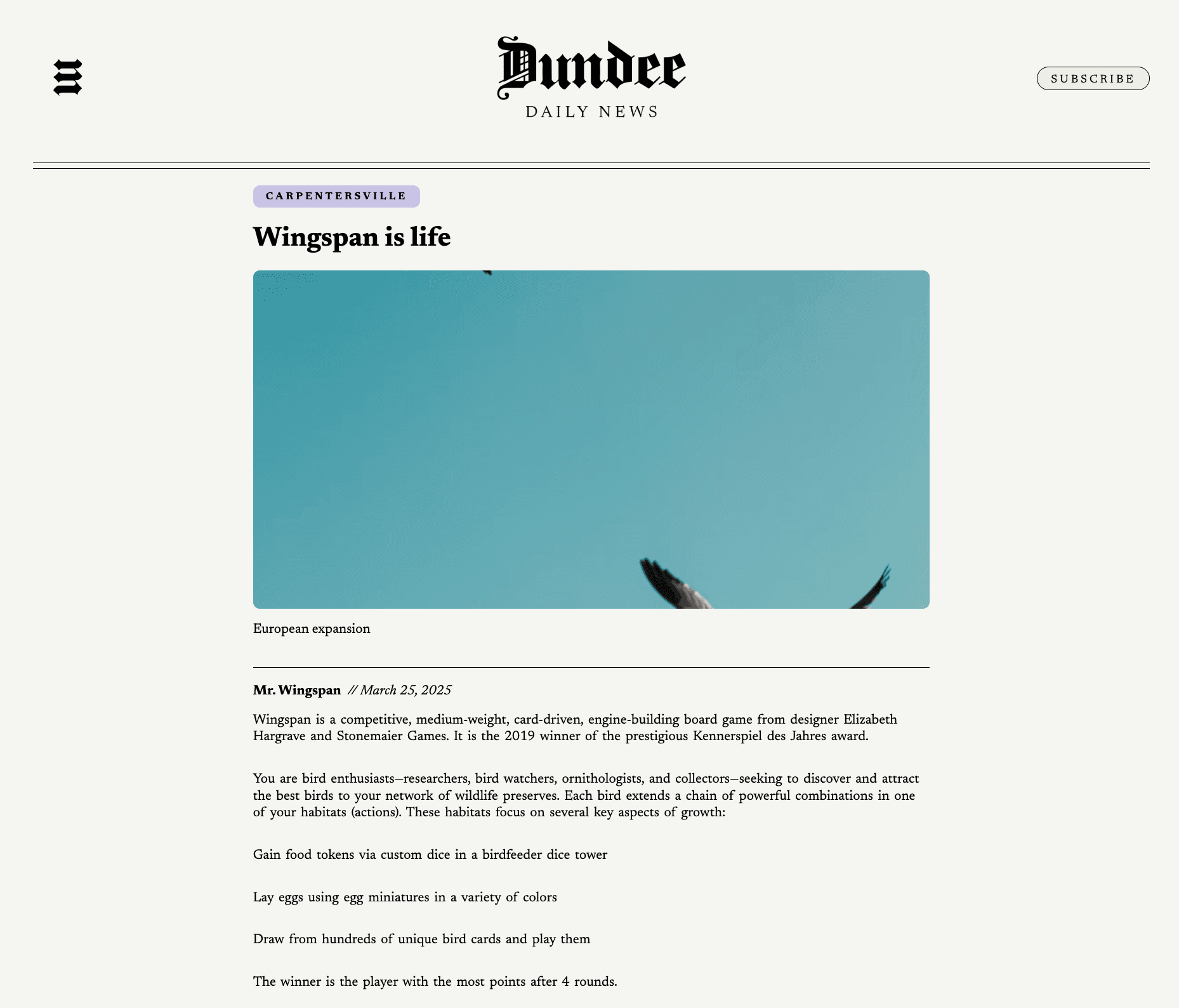
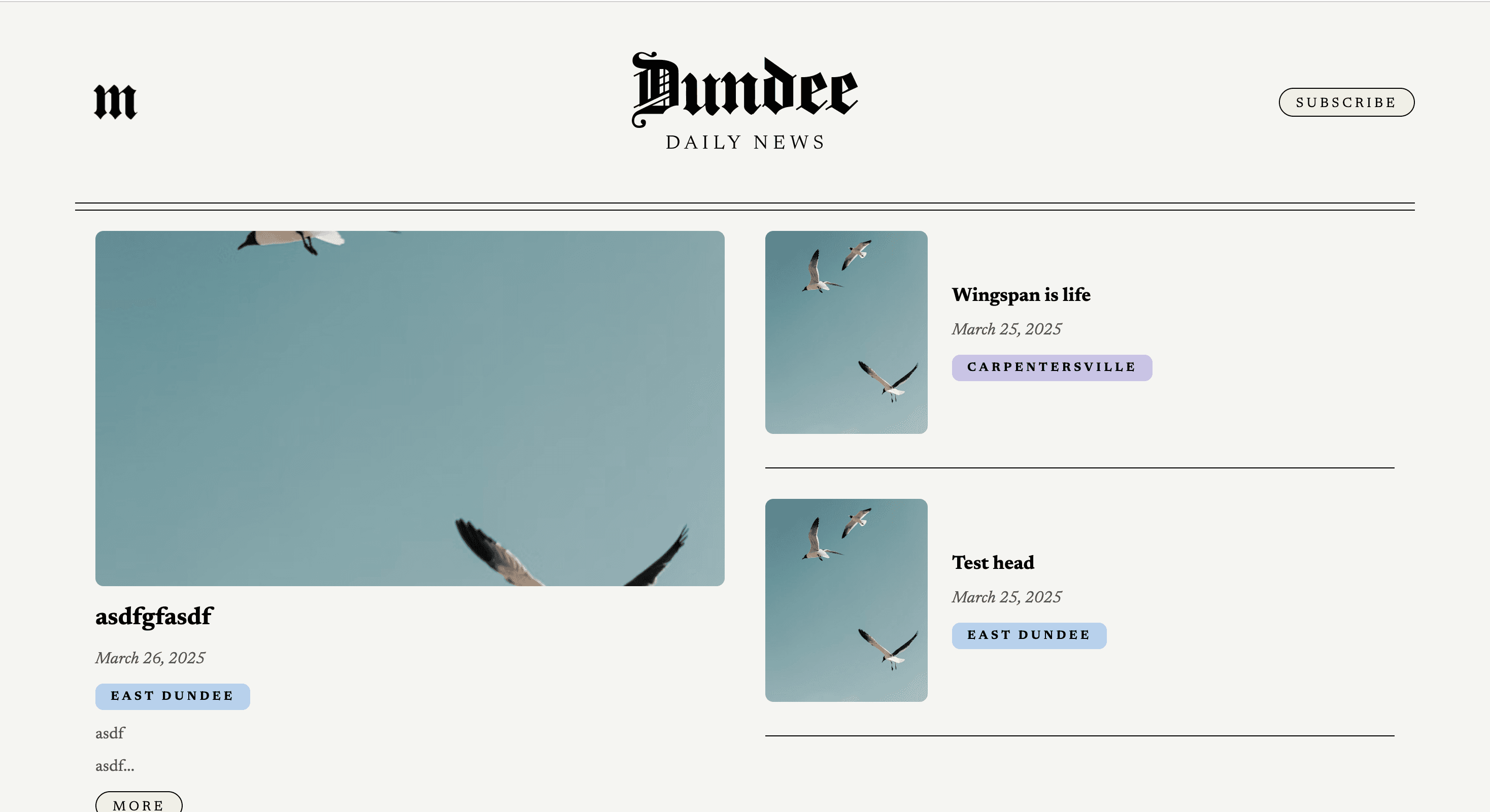
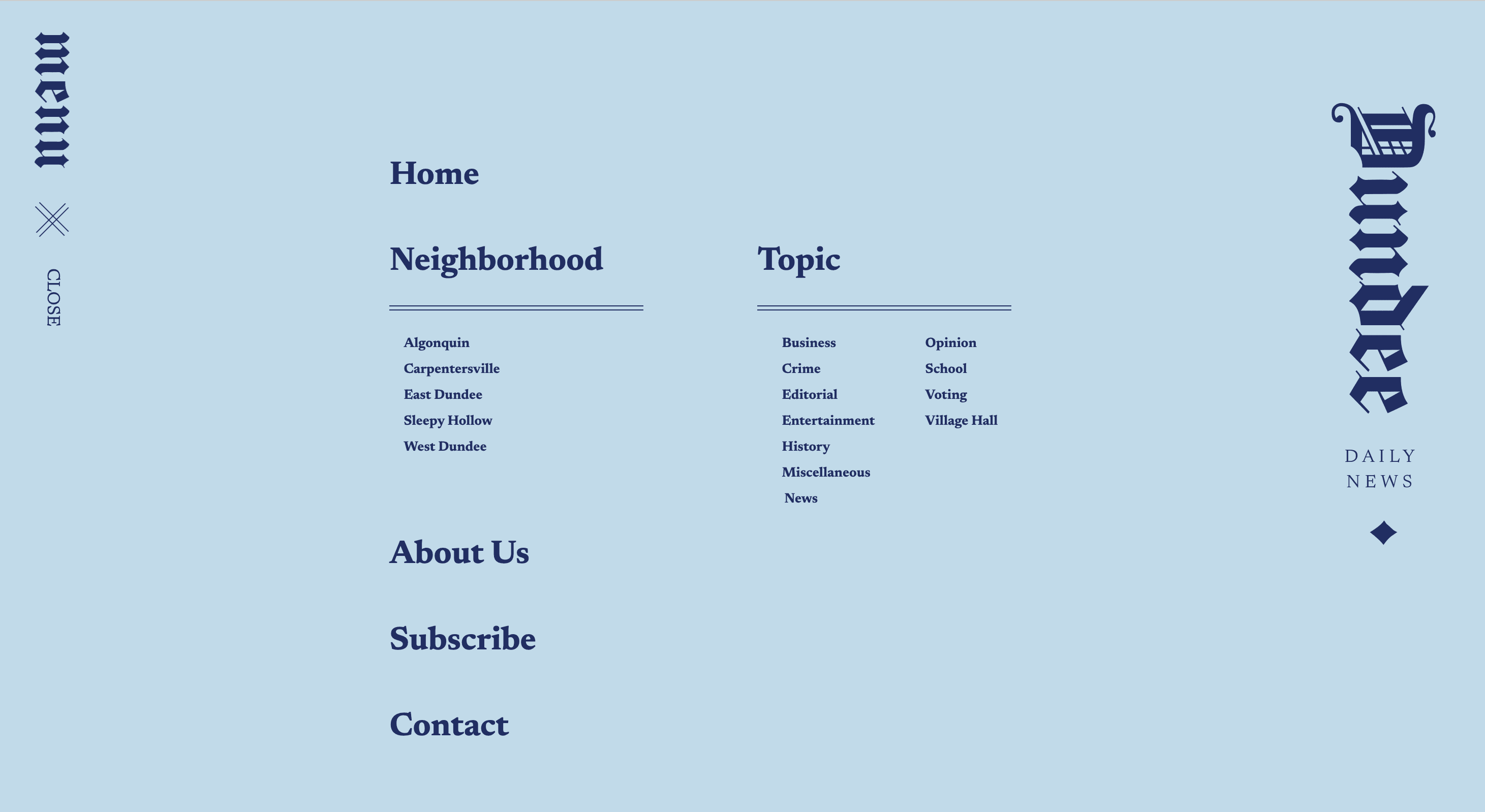
Overview
Dundee Daily News was built for residents of East Dundee, IL to have a local-first source of community updates. The concept focused on accessibility and readability for everyday users, with a structure that could support recurring publishing. While the product wasn’t ultimately released, it was built as a complete full-stack application and validated the core UX direction.
My Role & Contributions
- Built a full-stack news platform concept for East Dundee residents.
- Implemented frontend flows for browsing, reading, and organizing local content.
- Worked from a custom visual direction provided by a dedicated graphic designer.
- Designed the frontend structure to support future editorial workflows and scaling.
- Prepared the product for community use, despite the launch being paused.
Tech Stack
- React
- TypeScript
- Node.js
- Full-stack
- Community Product
Key Features
Local-News Focused UX
Information architecture designed for residents who need fast access to practical community updates.
Editorial-Ready Layout
Structure intended to support recurring content publishing and easy article maintenance.
Brand-Led Interface
Frontend implementation aligned to bespoke branding and visual direction from a professional designer.
Architecture / Technical Details
Full-stack scope
Implemented as a full-stack app, allowing product decisions to span UI, data flow, and deployment constraints.
Content-first frontend
Prioritized legibility, scannability, and low-friction article consumption for local-news use cases.
Design collaboration
Translated custom visual direction from a graphic designer into maintainable, responsive frontend implementation.
Launch-readiness
Built with practical launch intent, though final stakeholder decision paused release.
Outcome / Reflection
The project was not released after strategic decisions shifted, but it delivered strong learning around building civic/community products: keeping interfaces clear for broad audiences, collaborating with design stakeholders, and shipping pragmatically even when product direction changes.
Case Study
Sound braid
A web platform for multimodal, experimental anthropological work—sonic, visual, and textual materials treated as equal parts of meaning.
- React
- TypeScript
- UI/UX
- Multimodal Content
- Accessibility
Overview
SoundBraid is a web platform designed as a space for multimodal, experimental anthropological work. It hosts and interweaves sonic, visual, and textual materials in a way that moves beyond traditional academic formats—treating audio as central to how knowledge is created and experienced, not a secondary attachment.
Concept & Challenge
The goal wasn’t a standard content site, but a space that reflects non-linear, sensory, exploratory knowledge-making. The interface needed to support ambiguity and exploration—helping users “move through” content rather than consume it in a single, linear reading path.
My Role & Contributions
- Designed and implemented the full frontend experience.
- Translated abstract research concepts into usable interface patterns.
- Structured multimodal content (audio, text, visuals) so each modality felt primary—not supplementary.
- Iterated on layout and interaction to support exploration rather than linear reading.
- Worked closely with an anthropologist to align interface behavior with research intent.
Tech Stack
- React
- TypeScript
- UI/UX
- Multimodal Content
- Accessibility
Key Features
Multimodal content structure
Flexible UI patterns for presenting audio, text, and images side-by-side without forcing a single reading order.
Exploratory navigation
Navigation patterns that encourage wandering, revisiting, and associative jumps over strict hierarchy.
Layering & juxtaposition layouts
Custom layouts designed to support fragmented and evolving research outputs through collage-like composition.
Responsive listening-first UI
Interfaces optimized for both visual and audio-based interaction across mobile and desktop.
Architecture / Technical Details
Interaction model
Designed for slower, more reflective engagement—supporting spatial thinking and revisiting, rather than optimizing only for speed.
Multimodal balance
Layouts and information hierarchy ensured audio, text, and imagery shared equal weight, avoiding “audio as garnish.”
Responsive content composition
Components adapt to screen size without collapsing the concept—preserving juxtaposition and layered relationships across devices.
Accessibility considerations
Built with readable typography, clear focus states, and interaction patterns that work with keyboard and assistive tech for exploration flows.
Outcome / Reflection
SoundBraid proved that research-driven digital experiences can be both conceptually faithful and usable. The work sharpened my ability to translate abstract ideas into interaction design, and to build content systems that invite exploration without losing clarity.